We clear out the old, cracked filler in your concrete joints and reseal them with a flexible, self-leveling sealant that bonds to the concrete and flexes as it expands and contracts. Cleaner look, no weeds, and water can't wash out the ground under your slab.
Joint sealing is mostly about prep — a clean, dry joint is what makes the sealant actually bond and last. Here's how we do it.
We pressure-wash the slab and dig out everything in the joints — old failed sealant, crumbling filler, weeds, dirt, ants, and loose debris — so we're starting with a clean, bare joint.
Polyurethane sealant needs a dry joint to grip the concrete. We give the joints time to dry before we fill anything, so the bond holds instead of letting go later.
On deeper or wider joints we press in a foam backer rod first. It sets the right depth, saves sealant, and lets the sealant flex properly instead of being stretched three ways at once.
We fill the joints with a self-leveling polyurethane sealant (such as Sikaflex). Because it's self-leveling, it settles into a smooth, even line on its own for a clean finished look.
We check every run, tool the edges, and level off the fill so the joints look uniform and sit flush — no overfilled lumps or sunken gaps.
We let the sealant cure, walk the whole job with you, and leave the driveway clean. We'll let you know how long to stay off it before normal use.
Smart way to do it: add joint sealing to a driveway or patio wash as a discounted add-on. We're already pressure-washing and clearing the joints — pulling out the weeds, debris, and old failed filler — so the joints are perfectly prepped for the new sealant, and knocking it out in the same visit saves a separate trip.
This is the big one. Open joints let rain run straight down underneath the concrete and erode the base it sits on. Once that ground washes out, the slab loses support and starts to settle and crack. Sealing the joints keeps the water out and helps your concrete last longer.
Sealed joints give weeds and grass nowhere to take root, so you're not pulling growth out of your driveway every few weeks.
Open joints are an easy home for ants and other pests. Filling them with flexible sealant closes off those gaps.
Leaves, dirt, and yard debris stop collecting and packing into the joint lines, so the driveway stays cleaner and easier to maintain.
Crisp, even, uniform joint lines instantly make a driveway, patio, or sidewalk look cared-for and complete instead of cracked and patchy.
Concrete moves with heat and cold. A flexible self-leveling sealant stretches and compresses with that movement, so it stays sealed where a hard, rigid filler would crack and pop out.
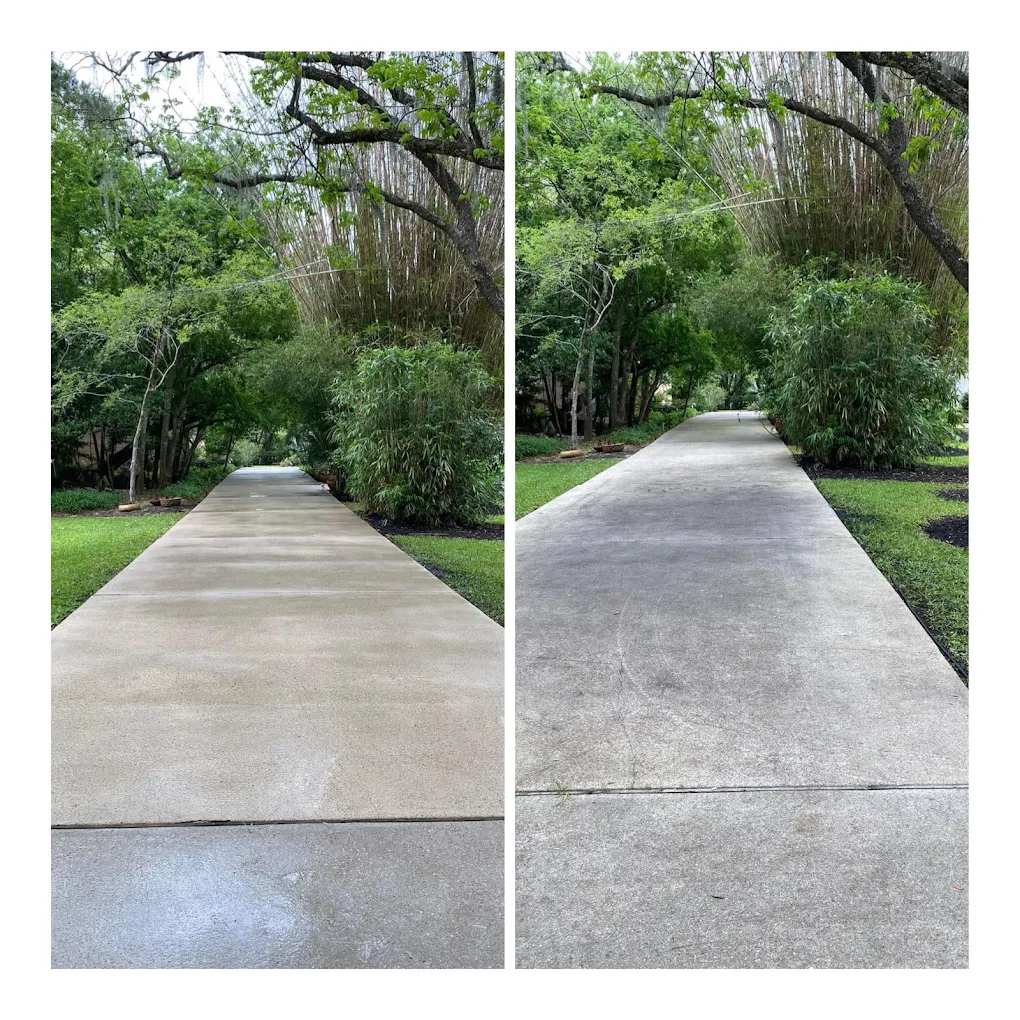
Cracked, weedy, debris-packed joints before — smooth, even, sealed lines after.
We're adding fresh before-and-after shots of our driveway joint sealing work. In the meantime, see real results across all our jobs.
View Our Full GalleryCall or text and we'll get you a fast, honest quote — no pressure, no obligation.
Get a free quote — and ask about pairing it with a driveway wash to save.